
Our values
We need all we have. We have all we need.
That idea sits underneath everything Mundus makes: use good ingredients thoughtfully, make useful things, waste less, and leave people with more room to live their actual lives.
The problem in front of us
Food has become complicated—and too much of it simply isn’t very good.
We all want change. But we also need dinner tonight.
The food system is enormous and overwhelming. A meal is much more human-sized.
The corporations shaping our food supply may not hear every voice asking for better, but they pay very close attention to where the money goes. A system built to protect margins, market share, and share prices will not suddenly put climate, nutrition, workers, or communities first simply because we ask nicely.
The current food system was not designed for you
It is producing exactly what it was built to produce.
We cannot create meaningful change by trying to beat that system at its own game. It owns the field, wrote the rules, and has relatively few players.
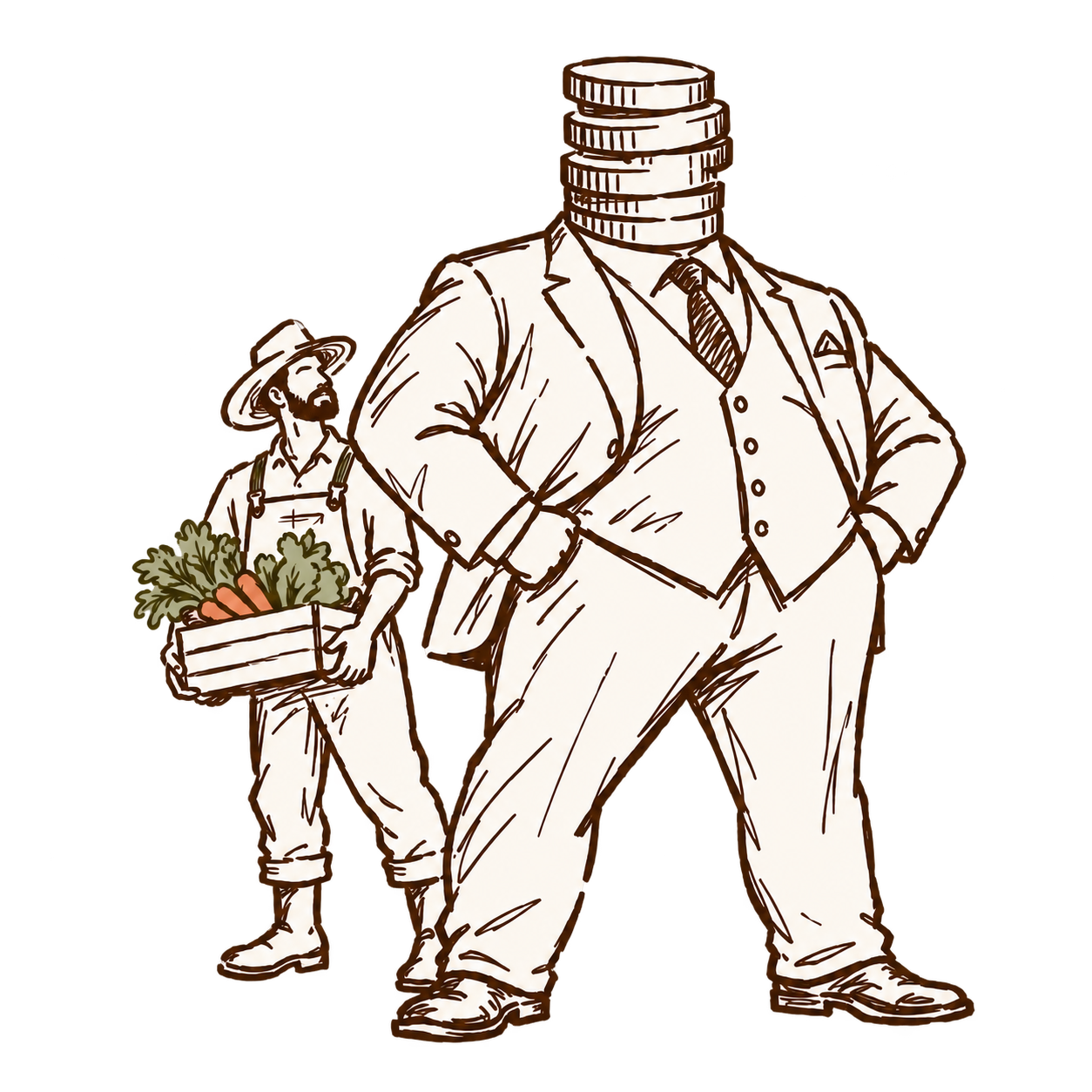
A narrow road to the shelf
A concentrated network of manufacturers, grocers, and distributors decides which products reach most shelves. The system rewards keeping its machinery running—even when that works against the food and the people making it.
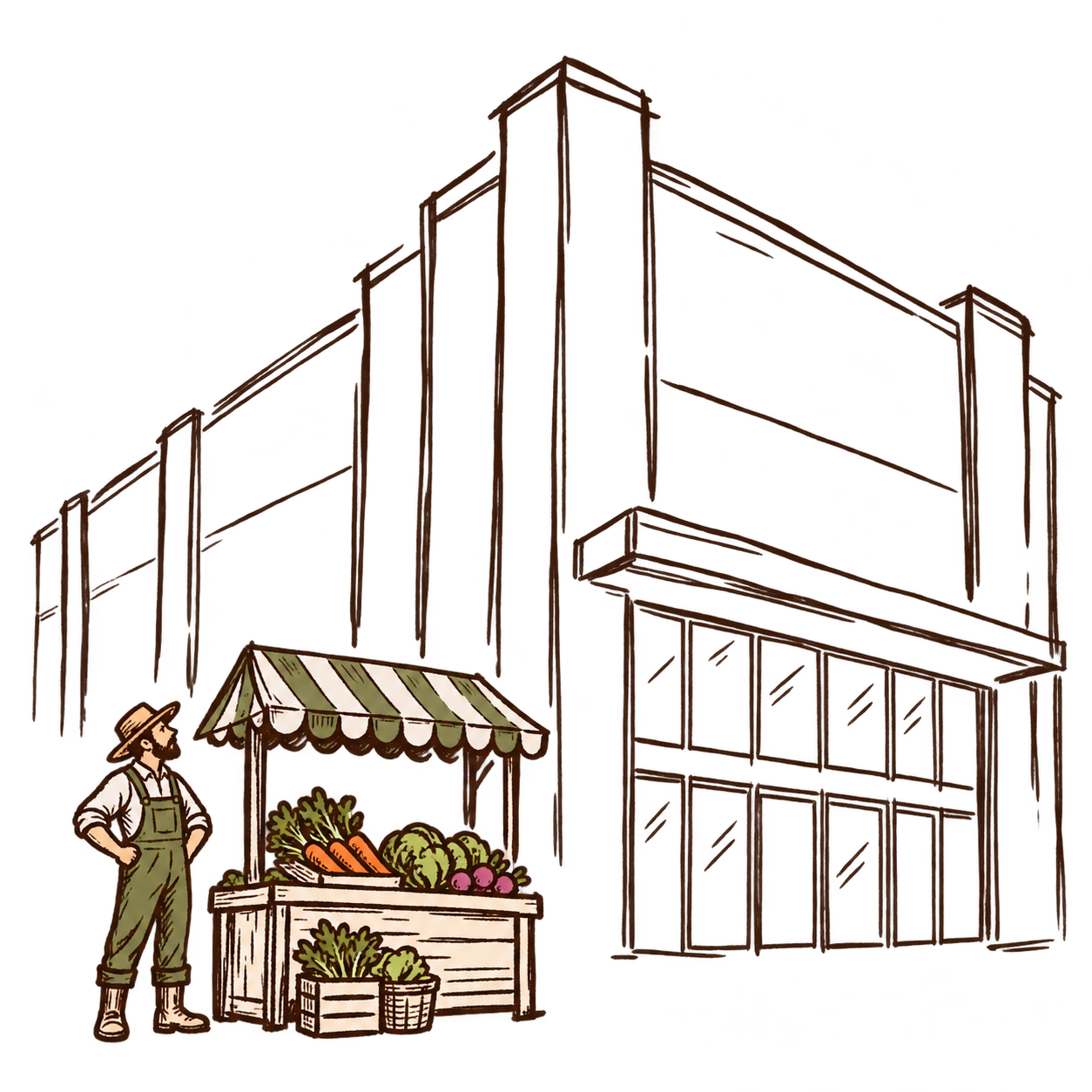
Food engineered for the system
Shelf life often takes priority over nutrition. Small producers are expected to match prices made possible by industrial scale and extractive supply chains. Food is engineered to survive the system rather than nourish the person waiting at the end of it.
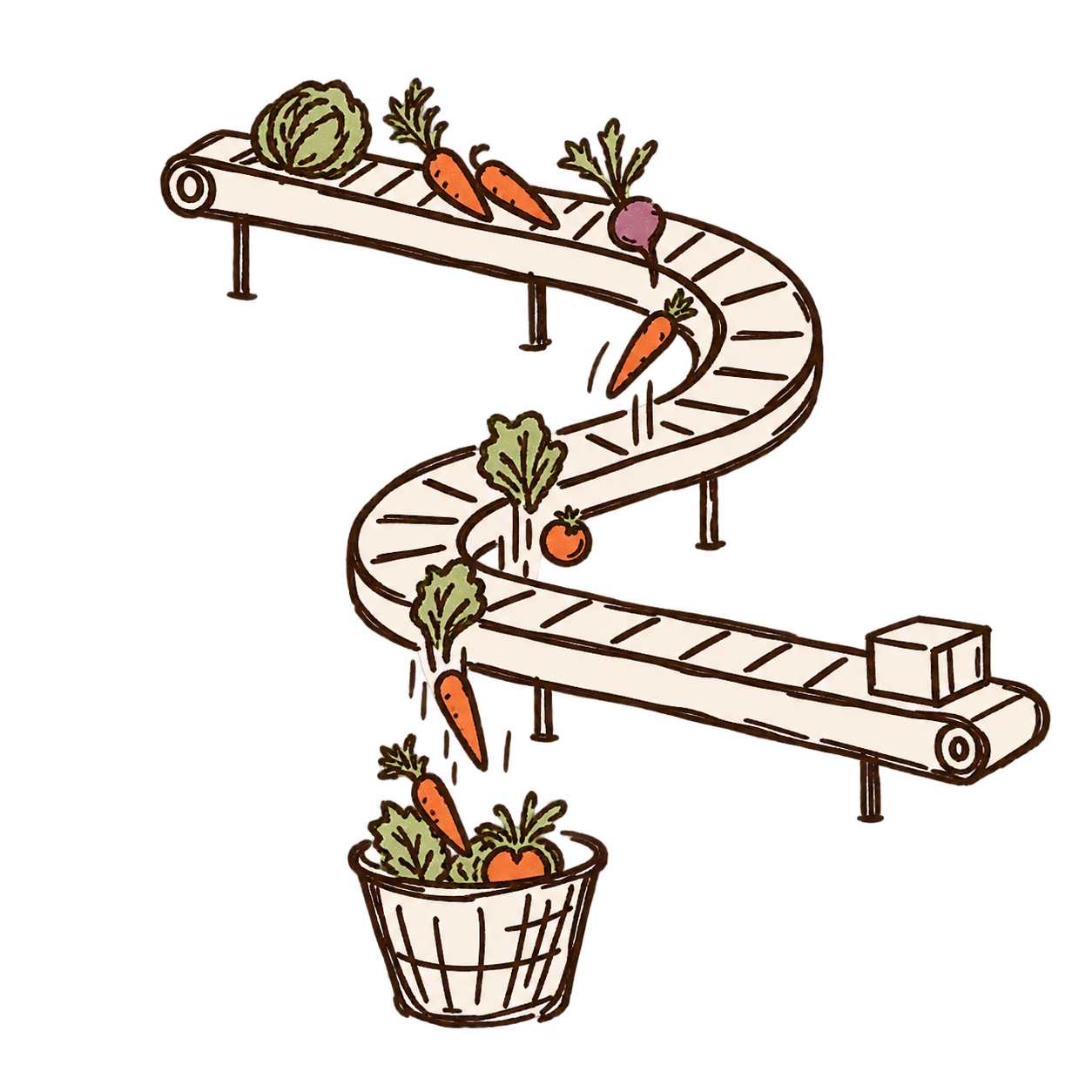
Still uneaten
Even after all that optimization, an estimated 30 to 40 percent of the United States food supply still goes uneaten. That is not an efficient system with a few unfortunate side effects. It is a system refusing to weigh lasting consequences against temporary gains.
USDA food-loss and waste estimate →So we’re building around it
What if we stopped asking the old system for permission?
Mundus exists to help prove another model: genuine food made by real people, using ingredients chosen for the good of bodies, communities, and the planet—not produced at someone else’s expense.
Right now, we are a tiny plant-based food company making one batch at a time. We are also building toward the future we believe in—including moving our creamery and dry mixes toward ingredients grown closer to home and creating more access to the local foods already feeding our community.
We have big dreams.
your neighborhood grocery actively supported the farmers and market vendors you already love?
good food came from somebody accountable to the people eating it—and supporting them were the easiest choice, not the inconvenient one?
A different route to the table
Shorter distances. Stronger relationships. Fairer returns.
We want to help create community spaces that bypass the transactional, extractive food system and bring food directly from the people making it to the people eating it.
Our voices may be easy to dismiss individually. Our collective choices are not. Every dollar kept within a better system is evidence that people want something different.
Every Mundus product is a small piece of that evidence.
A fair question
Isn’t it awfully convenient for a company to suggest that buying its products might help change the world?
Yes. Entirely. And that is precisely the point.
Commerce is already shaping the world. The question is whether it must keep doing so through extraction. This does not have to be a zero-sum game with a winner at one end of the supply chain and a loser at the other.
Producers can earn a living. Workers can be treated fairly. Communities can keep more of what they create. People can eat well. Soil and ecosystems can be left better than we found them. A business can succeed because it creates shared value—not because it became exceptionally talented at moving the cost somewhere nobody has thought to look yet.
We can all win. We simply have to build for that outcome.
What earns a place in our kitchen
Three promises we expect to be held to.
Values are easy to claim. Ours define what we source, what we make, what we save, what we charge, and what we build next.
Promise 01
Local is infrastructure.
Food grown and made closer to home keeps more money, knowledge, skill, and accountability within the community responsible for feeding itself.
A Central Oregon study found that 76 cents of every dollar spent with local producers remained in the regional economy, compared with 28 cents of every dollar spent on imported food. Each dollar of local produce sold also supported an additional 36 cents in economic activity throughout the region.
That is not merely a pleasant reason to shop locally. It is evidence of a stronger and more resilient food system.
We are Portland-founded, and local is a decision we have to keep making. Not every ingredient can come from next door yet—but every relationship we move closer strengthens accountability and keeps more knowledge, skill, and value within the community.
Source: Oregon State University — Economic Impact of Local Food Producers in Central Oregon
Promise 02
Sustainability has to take the long view.
Our bodies matter. So do the bodies doing the work. So do animals, soil, water, climate, household budgets, and the actual human beings trying to put dinner on the table.
We want ingredients with résumés: recognizable ingredients selected for the nutritional value, function, and flavor they genuinely contribute—with enough transparency that people can make informed decisions. We want plant-based food that people are excited to eat—not food that requires sacrifice, wealth, unlimited time, or a separate plate.
Food cannot really be called sustainable if its real costs are simply moved somewhere less visible—to a worker, another community, tomorrow’s soil, someone’s health or independence, or a household that cannot afford to participate.
We do not claim perfection. We promise to look directly at the tradeoffs, tell the truth about them, and keep improving what we can reach.
Promise 03 — Waste prevention is part of the recipe
Waste should be prevented before it needs to be managed.
More than one-third of the food produced in the United States is never eaten. Food represents about 24 percent of the material placed in municipal landfills—but causes an estimated 58 percent of the fugitive methane emissions those landfills release into the atmosphere.
By the time food is thrown away, we have already wasted everything required to grow, process, package, transport, refrigerate, sell, and purchase it.
That is why preservation is part of seasonal eating—not a loophole—and why waste prevention belongs inside the core of our business model.
We are building around longer usefulness rather than faster replacement: preserving seasonal ingredients, preventing spoilage before it begins, creating flexible products that solve more than one kitchen problem, and finding alternate uses for surplus ingredients, cosmetically imperfect food, and useful byproducts wherever food safety allows.
The goal is not to become exceptionally good at disposing of waste.
The goal is to design less of it.
Sources: US EPA — Environmental Impacts of U.S. Food Waste and Methane Emissions from Landfilled Food Waste
A practical kind of hope
A promise is only useful if it changes the next decision.
We cannot repair every broken part of food with one small company and a mixing bowl.
We can ask better questions before choosing an ingredient. We can build another relationship closer to home. We can rescue something useful before it becomes waste. We can make one meal easier, more trustworthy, and more welcoming—and then do it again.
That is how a small company participates in a much larger change: deliberately, imperfectly, and one practical decision at a time.
The next useful choice
Fixing the world might start by fixing a meal.
Life is complicated. Food doesn’t have to be.
Trustworthy ingredients. Useful products. Less nonsense.